How a Bale Accumulator Works and Whether One Pays for Itself on an Australian Hay Farm
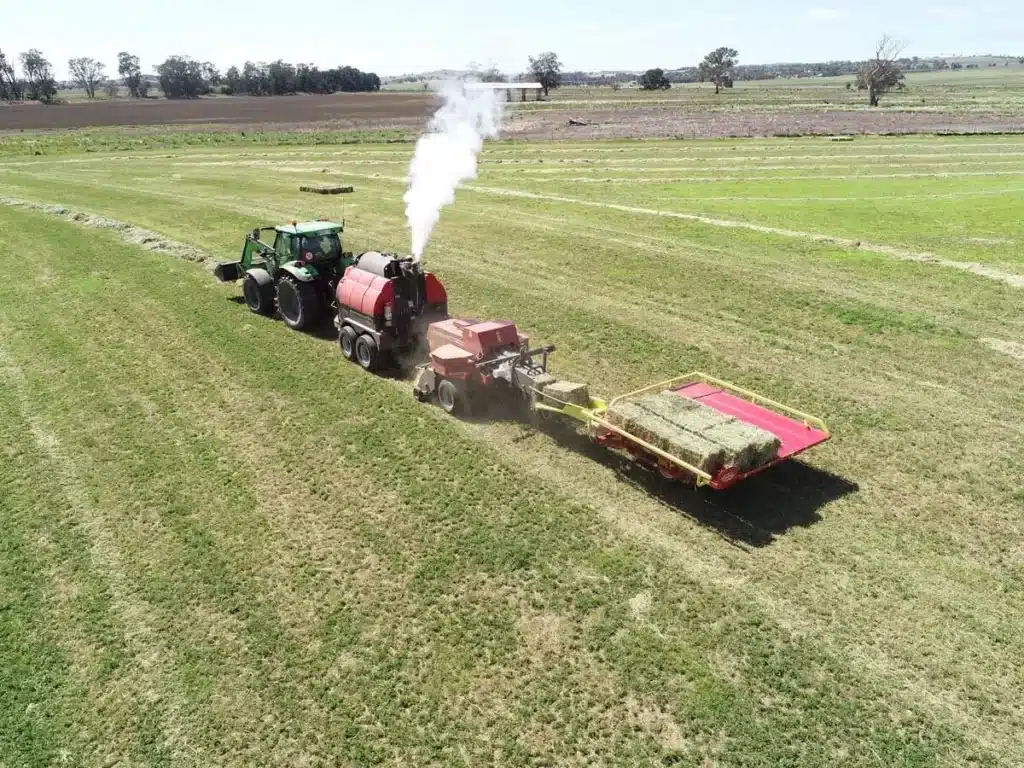
A bale accumulator is a towed machine that sits behind your small square baler and collects bales into a neat pack as they leave the bale chamber, then sets that pack on the ground for one-pass pickup. Instead of stopping to gather bales one at a time by hand, you leave the paddock in tidy groups of 15, ready to be lifted in a single movement. On an Australian farm, it is the difference between a crew walking the paddock and one person doing the whole job from the tractor cab.
That is the short answer. The rest of this guide covers how the machine actually works, how many bales it holds, what it costs to run, and the question every hay producer asks before spending five figures: does it pay for itself?
How does a bale accumulator work?
The Accumulator tows directly behind the baler on a drawbar, so it moves through the paddock as you bale. As each finished bale is ejected from the chamber, it slides onto the accumulator’s tray.
When the tray is full and the pack is formed, the tray tips and gently slides the group of bales onto the ground in a pack. The baler keeps moving the whole time. Every function runs automatically from the tractor cab, so a single operator controls baling and accumulating at once, with no one walking behind and no one riding a trailer.
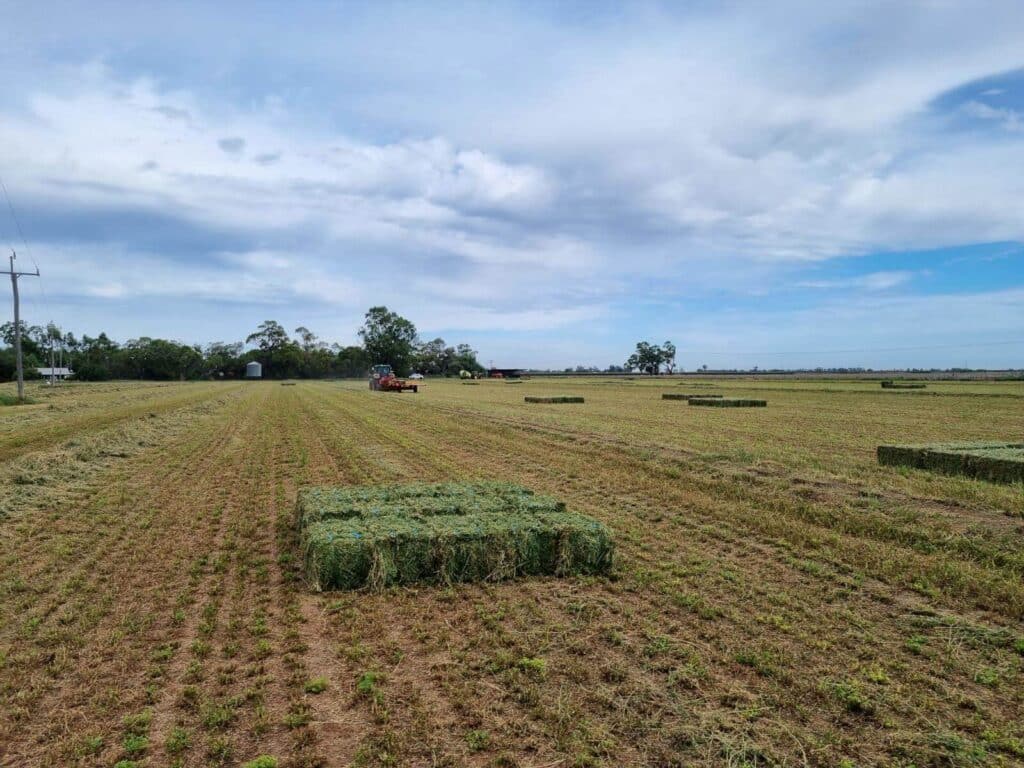
The result is a paddock dotted with neat packs rather than scattered singles. Those packs are then lifted in one motion by a matching grab, which is where the real labour saving comes in. An accumulator on its own collects the bales; an accumulator paired with a Bale Grab turns collection and loading into a one-person operation from baler to shed.
How many bales does an accumulator hold?
Australian accumulators are typically built in a 15-bale pack, which is the common choice for producers and contractors moving real volume. The pack size matters because it sets how your grab, your transport and your shed stack all line up. This makes a 2.4m2 stack meaning it can be picked up and stacked from any side, giving a neater pack overall. A 15-bale pack collected by the accumulator is a 15-bale pack lifted by the grab, loaded onto the truck and stacked in the shed, with the bale integrity preserved at every step.
Bale size drives the choice too. Small square bales in Australia are usually made at around 96 cm or 85 cm in length, and the accumulator is specified to match your baler so the pack forms cleanly. When you order, the machine can be set up with optional bale scales, a density controller or a plunge counter, and it comes standard with a folding tray and a baler towbar.
What does an accumulator actually save you?
The honest way to work out whether an accumulator is worth it is to price what you are doing now, then compare.
Count your handling passes. Without an accumulator, small square bales are handled several times: gathered from the paddock, loaded, carted and stacked. Each pass is labour, and each pass is a chance for a bale to be dropped, dragged or damaged. An accumulator collapses the paddock-collection pass into zero extra people, because it happens while you bale.
Price the labour honestly. A small square operation often runs on casual or family labour through the peak weeks. Add up the hours those people spend collecting and loading, multiply by what they truly cost you, and then ask the harder question: can you reliably get those people again next season? Labour you cannot find at any price is the reason many producers move to an accumulator and grab.
Price the weather. Small square hay is a premium, weather-sensitive product. Every hour bales sit in the paddock are exposed. Getting hay off the ground faster protects quality, and protected quality is money you keep at sale time.
Then divide across the life of the machine. A well-built accumulator handles a very large number of bales over its life. Spread the purchase price across the bales it will pack over many seasons and the cost per bale becomes small. The question stops being “can I afford the machine” and becomes “can I afford to keep hand-handling at my volume”.
Is a bale accumulator worth it?
For most producers and contractors baling real quantities of small squares, yes, and the trigger is usually labour rather than speed. If you are struggling to find people to walk the paddock or you are paying a premium for casuals during the exact weeks your margins are made, an Accumulator and Bale Grab pay for themselves by removing that dependence.
For hay producers baling small squares, a Small Bale Grab is most effective as part of a complete system with an accumulator. Without an accumulator, bales leave the baler individually and still need to be manually grouped into packs before the grab can pick them up, so the labour-saving benefit is largely lost. A grab on its own is better suited to buyers and end users, such as produce stores or horse owners, who aren’t making hay but need an efficient way to unload pre-grouped packs from a supplier’s truck. For producers looking to reduce manual handling from the paddock onwards, pairing the accumulator with a Small Bale Grab provides the complete handling system. This staged path is exactly what Jadan lays out in Bale Handling 101, which is worth reading if you are weighing up where to start.
A Cobram East hay producer scaled small bale output from 8,000 to as many as 100,000 bales per year after moving to a Jadan Small Bale Accumulator and Grab – Read the Case Study. That is the kind of step change the system enables once the manual handling ceiling is removed.
Accumulator, Grab, or both?
The two machines do different jobs and are designed to work together.
The Accumulator handles collection. It rides behind the Baler and forms the pack, so bales never have to be gathered by hand in the paddock.
The Bale Grab handles loading and stacking. It fits to your front-end loader or forklift and picks up the whole pack the accumulator has made, moving it onto transport or into the shed from the comfort of the cab. The mechanical handling preserves bale integrity and reduces leaf loss compared with manual work. It also removes the safety risk that comes with lifting bales by hand all day.
Bought together, they cover the full journey from baler to shed with one person and one tractor. If you are running larger square bales rather than small squares, the same thinking applies further up the range with the Big Bale Stacker and Verti-Stack.
Buying an Accumulator in Australia
A few things are worth checking before you buy. Confirm the unit is specified to match your baler so packs form cleanly. Decide on options such as scales, a density controller or a plunge counter. And think about parts and support, because a machine that goes down mid-season is only as good as your ability to get it running again.
Buying Australian-made matters here. An accumulator built for Australian conditions, backed by a local dealer who can supply advice and accumulator spare parts quickly, keeps you baling through the weeks that count. You can see the full specification on the Jadan Accumulator page, or find your nearest dealer to arrange a demonstration.


Frequently Asked Questions
How does a bale accumulator work?
It tows behind your small square baler and is a fully automatic process that collects bales into a set pattern as they leave the chamber. When the pack is complete, the tray tips and slides the group of bales onto the ground for one-pass pickup. Every function is controlled hydraulically from the tractor cab.
How many bales does an accumulator hold?
Jadan Accumulators are built around a 15-bale pack. The 15-bale unit is the common choice for producers and contractors handling higher volumes of small square bales.
Do I need a Grab as well as an Accumulator?
The accumulator collects bales into packs; the grab lifts those packs onto transport and into the shed. You can start with a grab alone for immediate labour savings, then add the accumulator as volume grows. Together they make baling-to-shed a one-person job.
Is a bale accumulator worth it for a small operation?
If you bale only a small number of small squares, a grab on its own is often the smarter first step. Once labour becomes hard to find or your volume climbs, an accumulator and grab together usually pay for themselves by removing your dependence on paddock crew.
Are Jadan accumulators made in Australia?
Yes. Jadan designs and manufactures its Accumulators in Cowra, NSW – built to withstand Australian conditions and backed by a national dealer network for parts and support.
Work out the numbers for your farm
Tell us your bale size, roughly how many small squares you make in a season, and how you handle them now. We will help you work out whether an accumulator and grab pay for themselves on your farm, and give you a firm price. Get in touch with the Jadan team or find your nearest dealer to arrange a demonstration.