What Does a Big Bale Stacker Really Cost Per Bale?

Most of us know what a machine costs to buy. Fewer of us know what stacking actually costs us each season, because it’s spread across wages, fuel, loader hours and late nights racing the weather.
We started out as farmers ourselves, so we’ve been on both sides of that sum. In this guide, we show you how to work out your big bale stacker cost per bale and what stacking currently costs you, using figures you already have.
Why Work It Out per Bale?
The sticker price is only part of the picture.
The purchase price hides how many bales you move, what the machine replaces each season and how long it lasts. Cost per bale brings those together. In practice, it looks like this:
Cost per bale = (purchase price + running costs) ÷ bales handled over its working life
To know whether that’s good value for you, compare your big bale stacker cost per bale with what stacking costs you now, per bale, in labour, loader hours and time.
Step 1: What Does Stacking Cost You Now?
Take a typical season and add up your current hay stacking cost. You need that number before any stacker figure means much.
- Start with labour. Count the hours your people spend carting and stacking bales, then multiply by their true hourly cost, including on-costs for casuals. Then, ask the harder question: can you get the same people again next season?
- Next, add your loader and telehandler hours. Every hour a loader spends stacking bales costs fuel, servicing and wear, on a machine you probably need somewhere else. Diesel has been expensive in 2026. The Australian Competition & Consumer Commission’s (ACCC) latest fuel price monitoring report put the regional average at 282.6 cents a litre on 21 October, down 1.5 cents from the previous week, across more than 190 monitored regional locations.
- Then count the time in the paddock. Every hour hay sits in the paddock is another hour exposed to the weather. AgriFutures research lists weather and the time it takes to make hay among the most important factors in final hay quality. Moisture is a separate risk once hay is stacked, so review our baling moisture guide to learn what to aim for.
Here’s an example of how the sums work. These are example numbers only, not real costs or a typical farm. Put your own figures in the right-hand column.
| Item | Example only | Your numbers |
| Bales stacked per season | 10,000 | |
| Stacking rate with your current setup (bales per hour) | 40 | |
| Hours spent stacking (bales ÷ rate) | 250 | |
| People on the job | 2 | |
| Labour cost per person per hour, including on-costs | $40 | |
| Labour cost (hours × people × hourly cost) | $20,000 | |
| Loader running cost per hour (fuel, servicing, wear) | $60 | |
| Loader cost (hours × hourly cost) | $15,000 | |
| Total stacking cost per season | $35,000 | |
| Current cost per bale (total ÷ bales) | $3.50 |
Step 2: What Would a Stacker Cost You per Bale?
There are two parts to working out your big bale stacker cost per bale.
Start with the machine itself. Take the purchase price, add the running and servicing costs you expect over its life, then divide by the number of bales you expect it to handle in that time.
Then add the cost of running it each season. A stacker still needs a tractor and an operator. Divide your bales per season by the stacking rate you’d expect, then multiply by your tractor and operator cost per hour.
The number of bales a stacker handles over its life depends on your volume and how well you look after it. As one real reference point, a family farm in Central Victoria reports its Big Bale Stacker from Jadan has handled about 80,000 bales, averaging 700 kg each, and is still going strong. On that farm, one operator stacks around 100 bales an hour. As a rule of thumb, spread over 80,000 bales, every $10,000 of purchase price adds 12.5 cents a bale, before running costs. Learn more about the Central Victoria farm.
We price by model and options, so ask our team or your local dealer for a quote and put it straight into the sums.
Step 3: Compare the Two
Put your current cost per bale next to the stacker’s. If what you’re spending now is well above what the stacker works out to, that’s a strong case for one. If the numbers are close, a loader and an extra hand may still be the right call for now, at least until your volume grows or labour gets harder to find. If that’s the answer, we’ll tell you.
What Else Matters Beyond the Numbers?
Some of the value doesn’t show up neatly in a per-bale figure.
- Beating the weather. Lachlan Hancock, another Jadan customer, runs a hay and contract baling business at Boyneside, Queensland. When he moved to larger 8x4x3 bales, stacking slowed down just when he needed to move hay ahead of the weather. “The Big Bale Stacker makes stacking hay much quicker, especially when we’re racing weather,” he shares. Read Lachlan’s story.
- One person instead of a crew. The Big Bale Stacker runs with one operator and a tractor, which frees up your loaders and telehandlers for other jobs.
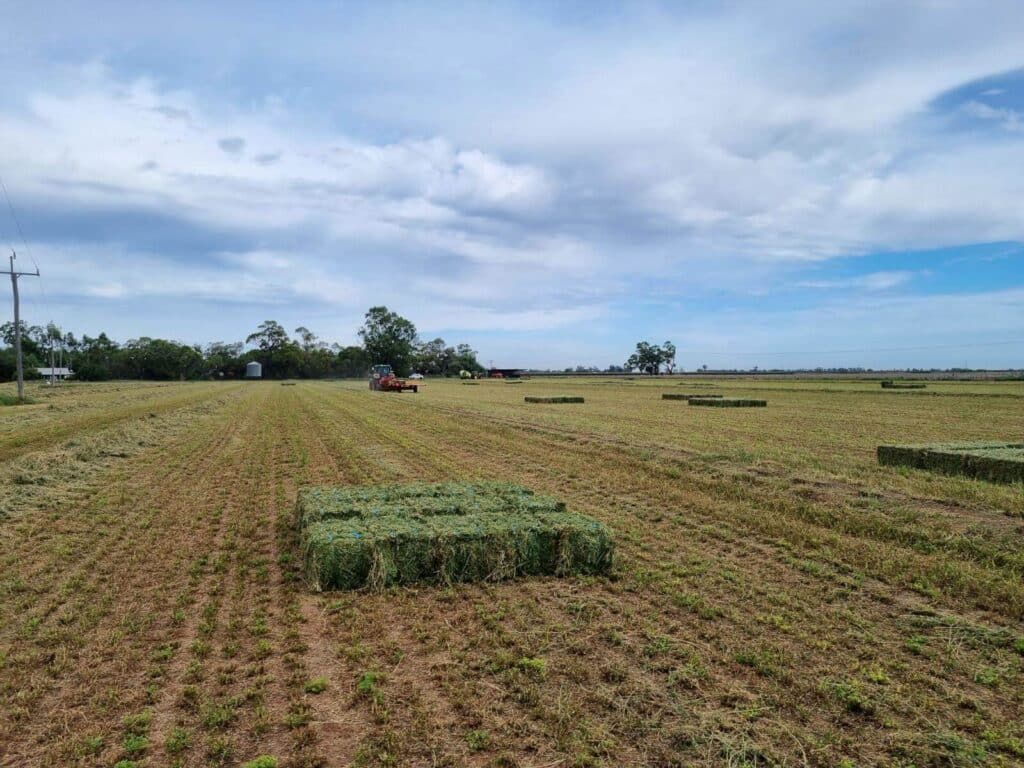
- Working with a Verti-Stack 1200. If you run a Verti-Stack behind the baler, it leaves 8x4x3 bales in the paddock in stacks of 3 or 4. The Big Bale Stacker picks up a whole stack at a time, so it fills its load (6 or 7 bales of 8x4x3, depending on the model) in fewer pick-ups.
- Picking the right model. The number of bales the stacker carries per load depends on your bale size.
| Big Bale Stacker 6* | Big Bale Stacker 7* |
|---|---|
|
|
*All bales 8 foot long. 6 or 7 refers to 8x4x3 bales.
If you’re still weighing up where a stacker fits in your wider setup, including the Unistack® T140, our Bale Handling 101 guide walks through the options.
Work Out Your Cost Per Bale with Us
Lorin and Oakley’s father, David Wallace, and his brothers built Jadan’s first accumulator in 1989 and started the business in 1990 on the farm near Canowindra. Hay handling has been our work since, so we’re happy to go through your numbers with you, including when they point to keeping your loader.
Tell us your bale size, roughly how many large squares you make in a season, and how you stack them now. We’ll help you work through the numbers and give you a quote. Call us on 1300 523 263, explore our website or find your nearest dealer to see a Big Bale Stacker working.


Frequently Asked Questions
How do I work out the cost per bale of a big bale stacker?
Add the purchase price to the running and servicing costs you expect over its life, then divide by the number of bales you expect it to handle. Add your tractor and operator cost each season. Compare that with what stacking currently costs you per bale.
How many bales can a Big Bale Stacker carry?
The load depends on bale size. The 6-bale model carries 6 bales of 3×3 or 4×3, or 4 bales of 4×4. The 7-bale model carries 7 bales of 4×3, or 5 bales of 4×4.
How many bales an hour can a big bale stacker stack?
Stacking rates vary with paddocks, bale size and conditions. One Central Victorian farm reports stacking around 100 large square bales an hour with one operator and a Jadan Big Bale Stacker.
How long does a big bale stacker last?
Service life varies with use, conditions and servicing. One Central Victorian customer reports that their Big Bale Stacker has handled about 80,000 bales and is still in service.
Is a big bale stacker worth it for a smaller operation?
That comes down to your volume and your labour. Run the numbers in this guide. If your current cost per bale is close to what a stacker would cost, a loader may still be the right call for now.
Does the Big Bale Stacker work with the Verti-Stack?
Yes. With 8x4x3 bales, the Verti-Stack leaves stacks of 3 or 4, and the Big Bale Stacker picks up a whole stack at a time.